iMedia R081 Pre Production Skills
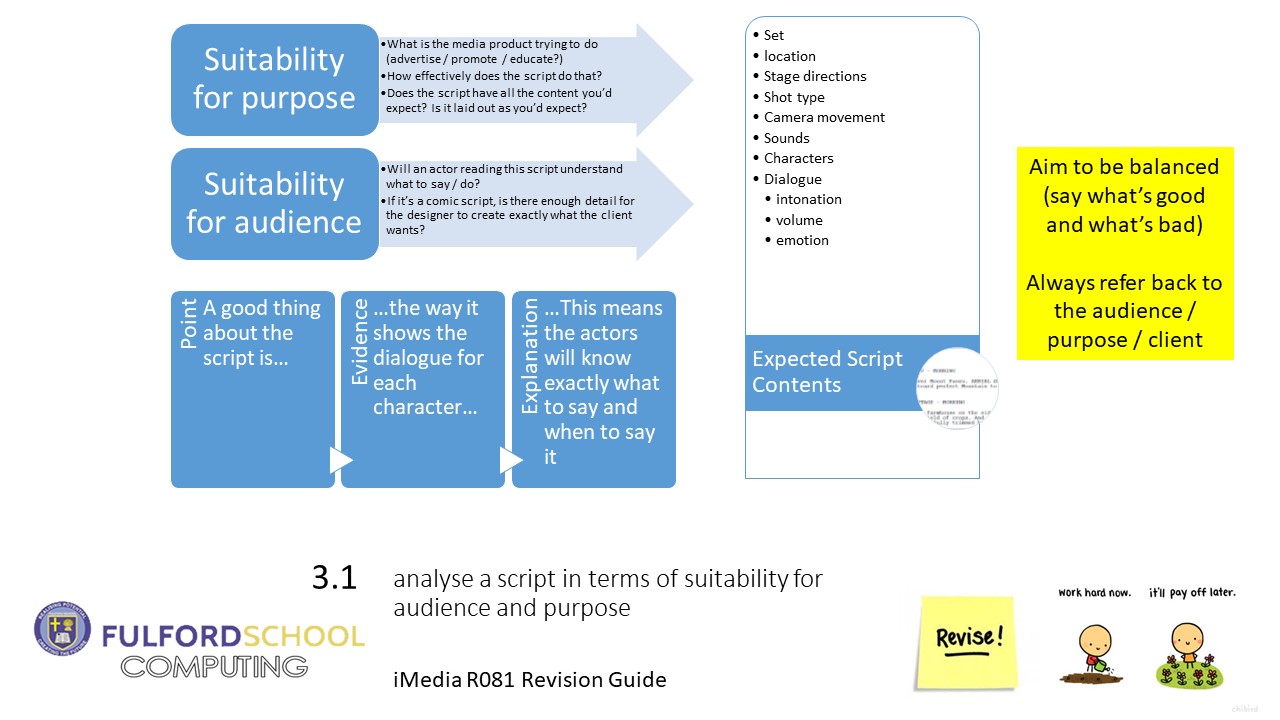
3.1: analyse a script in terms of suitability for audience and purpose
3.1: analyse a script in terms of suitability for audience and purpose

| Keyword | Definition |
|---|---|
| audience | The people who will use the script (e.g. actors or comic designers) |
| camera angle | High or low position of a camera |
| camera movement | Crab, zoom, pan, tilt, tracking |
| characters | Who's speaking or moving |
| dialogue | What a character says |
| emotion | How a character should speak (e.g. angrily, sadly, lovingly) |
| exterior | When a scene takes place outside |
| interior | When a scene takes place inside |
| intonation | How a character should speak (e.g. as a question, uncertainly, confidently) |
| location | Where the action takes place |
| purpose | What the script is trying to achieve (e.g. educate, entertain, inform, advertise, promote) |
| script | Written document that contains dialogue, stage directions, location, set and characters |
| set | Props that are needed |
| shot type | Where the camera is in relation to what it's filming (e.g. extreme long shot, long shot, medium shot, close up, extreme close up) |
| sounds | Music or noises that are essential to the scene |
| stage directions | Instructions to the actors that describe movement or posture |
| suitability | Whether the script is appropriate for the target audience and purpose |
| volume | How loud or quiet the character should speak |